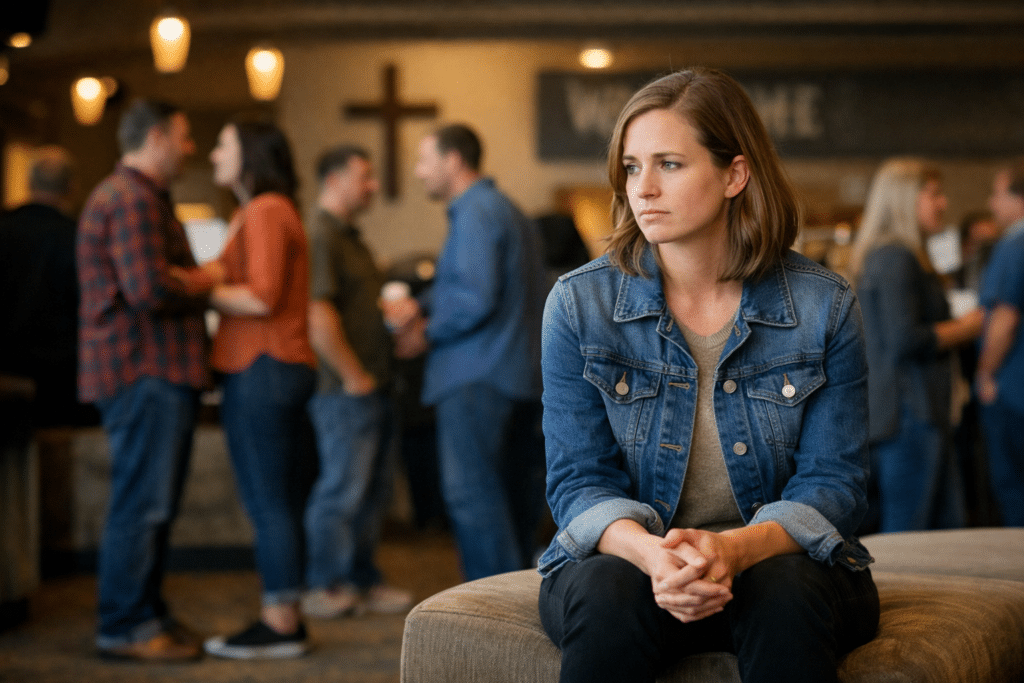
Loneliness is one of those experiences almost everyone understands and almost no one wants to admit out loud. You can be surrounded by people, active at church, replying to texts, showing up to work, and still feel painfully unseen.
And you are not imagining it.
In early 2024, the American Psychiatric Association reported that 30% of U.S. adults felt lonely at least once a week during the past year, and 10% said they felt lonely every day. Younger adults reported especially high levels of loneliness.
That’s heartbreaking, but honestly, it’s not surprising.
If you’ve ever found yourself wondering, Why am I so lonely? What is wrong with me? Why does it feel so hard to build real connection? — you are not alone, and you are not broken. Loneliness is often a signal that something important is missing: meaningful connection, emotional safety, reciprocal friendship, or the courage to keep showing up when relationships feel awkward, vulnerable, and inconvenient.
From a Neuroscience Informed Christian Counseling® perspective, loneliness is not just a social problem. It often touches the whole person: mind, body, relationships, and spirit. God designed us for connection, and when that connection is missing, we feel it deeply. Neuroscience Informed Christian Counseling® helps us understand why relationships matter so much and why healing often happens in safe, life-giving connection.
We Want a Village, but We Don’t Always Want to Be Villagers
One big reason many of us feel lonely is simple, but not easy: healthy community requires inconvenience.
We all want the kind of friendships where people show up, remember what matters to us, bring soup when we’re sick, celebrate our wins, and sit with us in our pain. We want a village. But real village life asks something from us too.
It asks for effort.
It asks for initiative.
It asks for flexibility.
It asks for sacrifice.
That’s where many of us get stuck.
Our culture prizes comfort, convenience, and protecting our peace. There is some wisdom there. Boundaries matter. Rest matters. Saying no can be healthy. But sometimes we use “boundaries” and “self-care” to justify staying emotionally distant, socially passive, or unwilling to do things that feel mildly inconvenient.
Friendship does not usually grow in the land of “only if it fits perfectly into my schedule, mood, and preferences.”
Sometimes connection looks like this:
- Going to the dinner invitation even though you’re tired
- Following up with the person you said you’d pray for
- Inviting someone to coffee instead of waiting to be invited
- Staying a little longer after church to actually talk
- Bringing a meal, making a call, or offering a ride
- Saying yes to bowling, even if bowling is not exactly your spiritual gift
If you want a village, you usually have to become the kind of person who helps build one.
That does not mean becoming a doormat. It does not mean ignoring your limits or tolerating unhealthy relationships. It simply means remembering that meaningful community costs something. And most of the time, it costs convenience.
Loneliness Grows When Communication Gets Thin
Another reason we feel lonely is that many people have forgotten how to build connection through reciprocal conversation.
That sounds obvious, but stay with me.
A lot of modern communication is fast, shallow, distracted, or self-focused. We text instead of talk. We scroll instead of engage. We share content instead of sharing ourselves. Then we wonder why we feel disconnected.
Real friendship grows through mutual curiosity.
That means asking questions and caring about the answers.
It means listening instead of waiting for your turn to talk.
It means offering more than one-word answers.
It means letting someone know who you actually are.
Many lonely people have had the same discouraging experience: they meet with someone, and the other person talks about themselves the entire time, asks zero questions, and leaves them feeling more invisible than before.
That kind of interaction doesn’t create closeness. It creates exhaustion.
Healthy friendship requires two people choosing to engage. It takes honesty, interest, and emotional presence. In NICC language, we could say human beings are wired for meaningful connection, and when conversations stay surface-level or one-sided, our need for relational safety and mutuality remains unmet. Christian counseling for anxiety, depression, and trauma often helps people understand the deeper wounds, fears, or relational patterns that can make friendship feel harder than it looks from the outside.
Many of Us Want to Be Known, but We’re Terrified to Be Vulnerable
This is the part nobody loves talking about.
Sometimes loneliness is not only about the people around us. Sometimes it is also about how much of ourselves we’re willing to risk bringing into relationship.
We want to be known deeply, but being known requires vulnerability. And vulnerability can feel terrifying.
So we stay pleasant. Funny. Helpful. Spiritual. Busy. Easygoing. Put-together. We keep conversations in the safe zone. We hint instead of speaking clearly. We wait for other people to make the first move. Then we feel sad that no one really knows us.
But friendship usually deepens when someone gets brave enough to be direct.
That might sound like:
- “I really enjoy being around you. Want to get coffee again sometime?”
- “I’m trying to be more intentional about friendship, and I’d love to stay connected.”
- “Your friendship matters to me.”
- “I’ve been having a hard time lately, and I could use some support.”
That kind of honesty can feel vulnerable, but it also takes the guesswork out of connection. Clear, warm communication helps relationships grow.
Sometimes Loneliness Has Deeper Roots
Not all loneliness is solved by “put yourself out there more.”
Sometimes there are deeper reasons connection feels hard.
If you’ve experienced rejection, betrayal, trauma, shame, bullying, family dysfunction, or chronic emotional neglect, your nervous system may have learned that closeness is risky. You may deeply want connection while also instinctively bracing against it.
That tension is exhausting.
From a NICC perspective, this matters because loneliness is not always just about social skills or scheduling. Sometimes it is tied to wounds that make trust difficult, vulnerability costly, or relationships feel unsafe. Healing in those places often happens through wise, caring relationships where you can process pain, grow in emotional awareness, and experience safe connection again. Christian counseling can be a helpful next step when loneliness feels chronic, painful, or tangled up with anxiety, depression, or old relational hurts.
What Can You Do if You Feel Lonely?
Here’s the simple version: if you want good friends, work on becoming a good friend.
That does not guarantee every relationship will work out. Some people will not reciprocate. Some friendships will stay shallow. Some seasons really are lonely. But you can still move toward connection with wisdom and intention.
Try this:
- Take initiative instead of waiting for everyone else to go first
- Practice reciprocal conversation
- Be clear when you want to build a friendship
- Let yourself be known a little more honestly
- Say yes to healthy inconvenience
- Look for people who also want to build real community
- Get support if past wounds are making present connection hard
And one more thing: choose people who are willing to meet you in the middle. Friendship should not be carried by one exhausted person doing all the reaching, planning, and caring. Healthy relationships involve mutual effort.
Conclusion
If you’ve been asking, Why am I so lonely? the answer is probably not, “Because something is wrong with you.”
More often, loneliness grows where connection has become thin, vulnerability feels unsafe, communication is shallow, and convenience keeps winning over commitment.
The good news is that loneliness does not have to have the final word.
As you become more intentional, more honest, and more willing to both love and be loved, you create room for real friendship to grow. And if loneliness feels especially stubborn, painful, or tied to deeper wounds, professional support can help. At MyCounselor.Online, our counselors use a neuroscience-informed, Christ-centered approach to help people heal relational pain, grow in emotional health, and move toward the kind of connection God designed us for. Get matched with a counselor if you’re ready for support.